Trinity College Dublin School of Biochemistry and Immunology
Author : Jack Brophy
Introduction
Dr. Jean Fletcher, Associate Professor and Director of Undergraduate Teaching & Learning at Trinity College Dublin School of Biochemistry & Immunology, wanted to move beyond traditional methods to foster creative problem-solving and channel deeper learning in her immunotherapeutics students. However, given the technical nature of the module content and Jean’s limited experience with challenge-based learning, it felt a bit daunting to introduce a new hands-on, active learning assignment.
The Solution
We worked closely with Jean to design a challenge that aligned with her module content and learning outcomes. This included challenge customisation, consulting on problem-solving frameworks and logistics considerations.
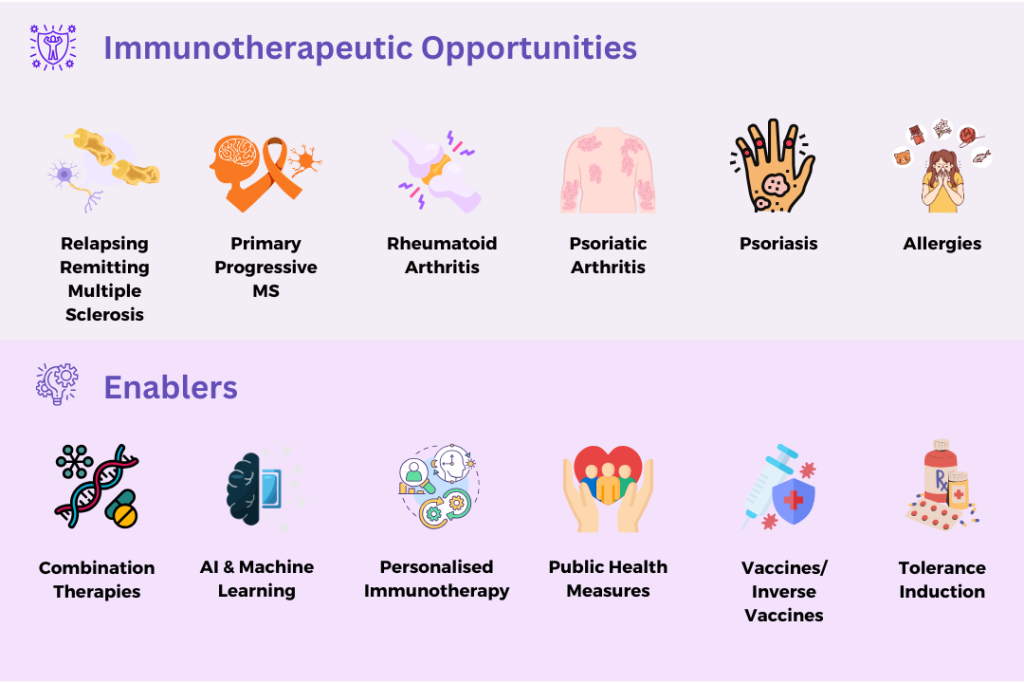
Students worked in teams of 3 and were practically guided through a stage-gated, immersive learning experience. Students choose one of six pre-identified focus areas and develop a concept for a new idea aimed at the immunotherapeutics community. Each focus area represented a current challenge for practitioners today.
The platform facilitated this process, provided students with tips throughout to help them foster their creative problem-solving skills and collective critical thinking skills, while staying within the scientific boundaries necessary for the subject. Each team went through defined stages of the innovative process:
Stage 1: Research – Students selected a focus area, gathered relevant research findings, conduct thematic analysis in order to frame a narrow problem-to-be-solved.
Stage 2: Brainstorm – Each students was tasked with brainstorming multiple solutions to their identified problem. From here, they selected a single solution to bring forward, received rapid AI feedback on the feasibility and landed on a working solution.
Stage 3: Review – Individually, students provided feedback to another team on how they could improve their idea, following the guidelines outlined in the platform.
Stage 4: Modify – Teams received peer and expert feedback on their idea. They discussed the feedback in groups and iterated on a final solution.
Stage 5: Prototype – Each group uploaded their working prototype to the platform which outlined their proposed solution in full detail.
Stage 6: Reflection – Individually, students submitted a written reflection on their subject learning, mindset and skills development.
The Impact
- 95% of students found the platform ‘Very Useful’ or ‘Extremely Useful’ at deepening their subject matter knowledge.
- 100% of students found the platform ‘Very Useful’ or ‘Extremely Useful’ at supporting effective collaboration.
- 20% increase in student’s confidence to solve complex problems.
- 15% increase in students’ confidence to generate creative ideas.
- On average, students rated the overall learning experience as 9/10.
The Voice of the Educator and Student
“We used Anytime Creativity within our immunotherapeutics class to challenge students in a way that went beyond traditional methods, fostering a deeper, more engaged learning experience. The platform allowed me to seamlessly integrate challenge-based learning into the module, encouraging collaboration, creative thinking and critical analysis.”
Dr. Jean Fletcher, Educator
“The challenge was genuinely fun and pushed us to think about drug development from a totally fresh perspective. It got us out of our usual mindset and into a more creative space.”
Student (anonymous survey response)