UCD School of Biomolecular and Biomedical Science
Author : Jack Brophy
Case Study with UCD School of Biomolecular and Biomedical Science
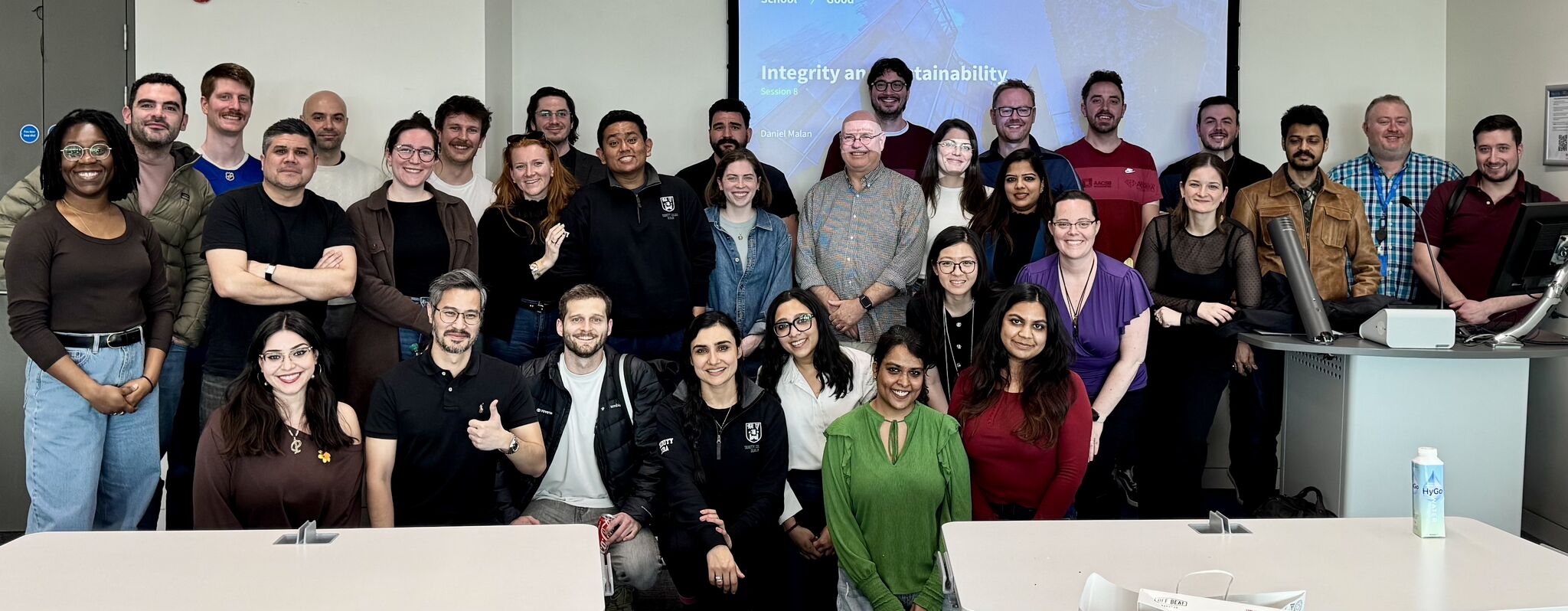
Craig Slattery, Assistant Professor of Regulatory Affairs & Toxicology at University College Dublin used the Anytime Creativity platform to offer a real-world challenge for the 165 Master students on his Regulatory Affairs for Life Sciences Masters module. The primary goal was to deepen learning around the proposed revision of the directives & regulations of the European Medicine Agency (EMA). A secondary goal was to foster a collaborative problem-solving mindset amongst this new intake of diverse learners.
The Solution
We worked closely with Craig to to customise a challenge that aligned with his module content and learning outcomes.
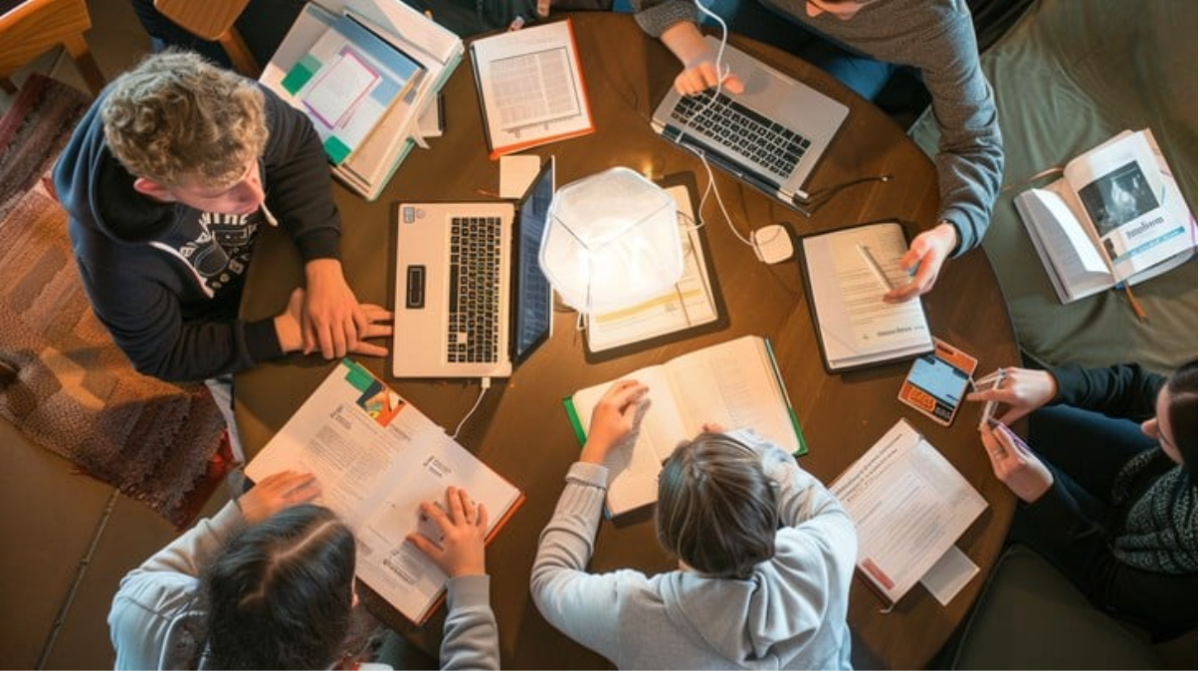
Students worked in teams of 3 and were intuitively guided through a stage-gated, immersive learning experience to develop a new idea that supported the EMA in achieving its regulatory objectives.
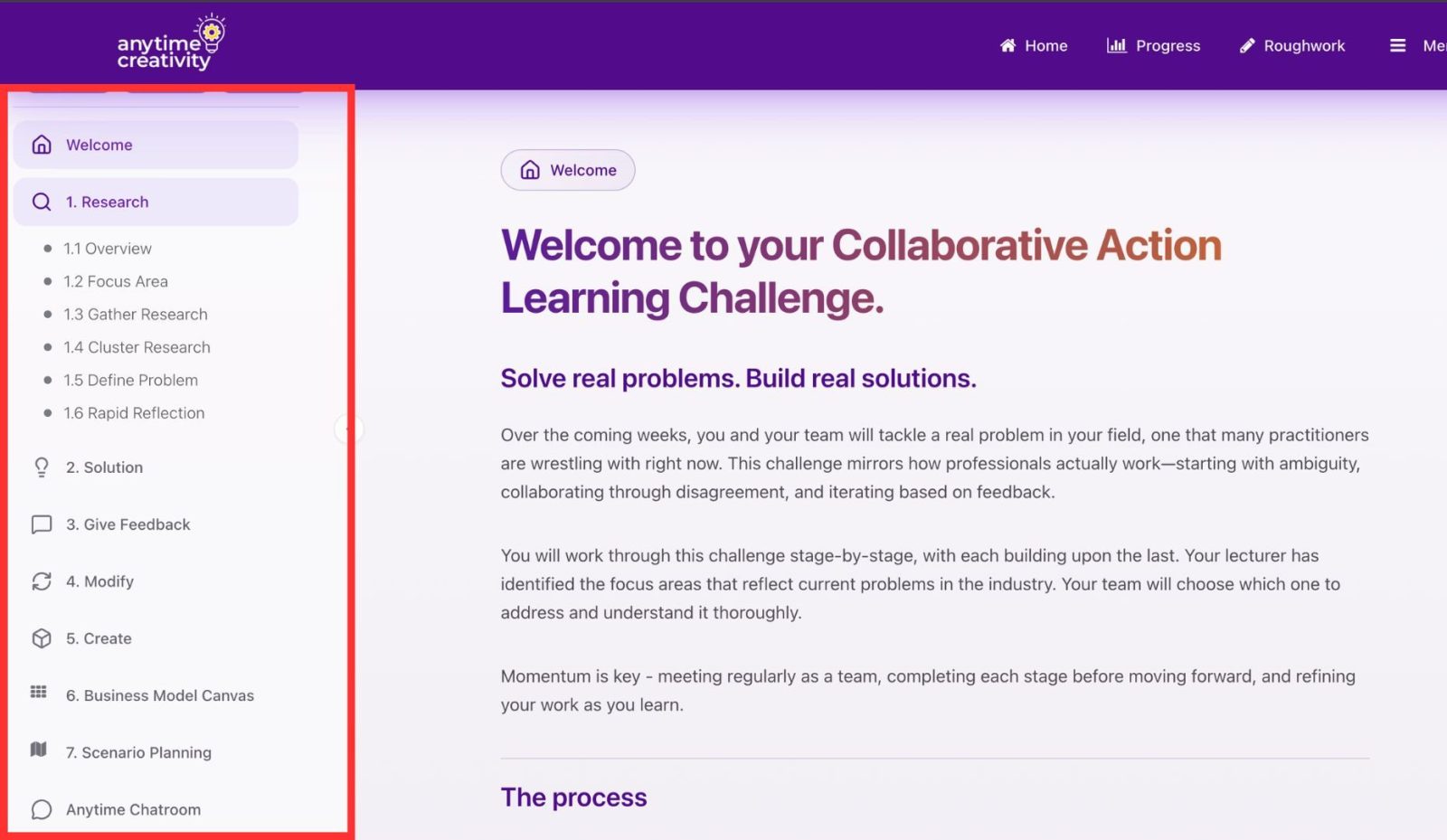
Each team was guided through dix distinct stages:
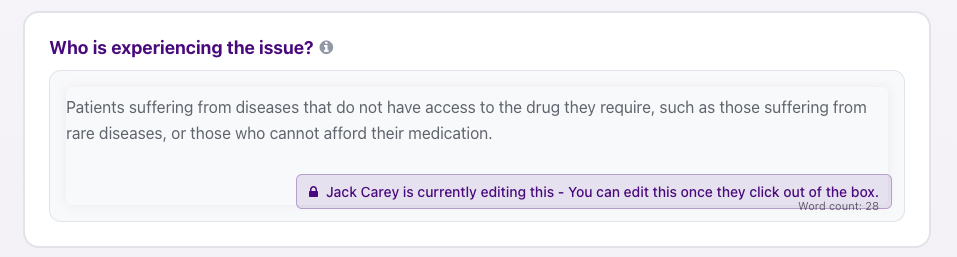
Stage 1: Problem – Students selected a focus area, gathered research findings, conducted a thematic analysis and framed a narrow problem-to-be-solved.
Stage 2: Solution – Each students was tasked with brainstorming multiple solutions to their identified problem. From here, they selected a single solution to bring forward, received rapid AI feedback on the feasibility and landed on a working solution.
Stage 3: Peer Feedback – Individually, students shared feedback on another team’s idea, offering suggestions on how that team could potentially improve their idea further.
Stage 4: Iterate – Teams received peer and expert feedback on their idea. They discussed the feedback in groups and iterated on their solution.
Stage 5: Prototype – Each group uploaded their working prototype to the platform to bring their idea to life.
Stage 6: Reflection – Individually, students submitted a written reflection on their subject learning, mindset and skills development.
The Impact
- 96% of students found the platform ‘Very Useful’ or ‘Extremely Useful’ at keeping them engaged in the learning experience.
- 20% increase in student’s confidence to solve complex problems.
- 22% increase in students’ confidence to generate creative ideas.
The Voice of the Educator and Student
“We created an Innovation Challenge for 165 Masters students based on new EMA directives & guidelines. The quality of ideas were superb and students were so immersed in the collaborative hands-on learning experience. I particularly loved the peer feedback stage where the class honed their critical and creative thinking skills. It was a fabulous challenge, low hassle for me and high impact for students. Highly recommended.”
Craig Slattery, Educator
“I liked that the Challenge was real-world because it made it so immersive. We had fun brainstorming so many different ideas and it made me think about how we all look at problems from different perspectives. It was a great challenge and I learned loads about my creativity.”
Alessandra Wong Albujar, Student
“I really enjoyed building on the ideas of others, looking through all the ideas that were submitted & thinking about how they could be improved. It forced me to think in creative ways that I don’t often use. Overall the challenge was a fresh & playful way for students to test their real-world healthcare innovation skills. Well done for arranging it.”
Allison Laws, Student